
SMALL APPLIANCE COMPONENT EXAMPLE
Aroma Diffuser Plastic Component
Mounting and assembly features to review before tooling.
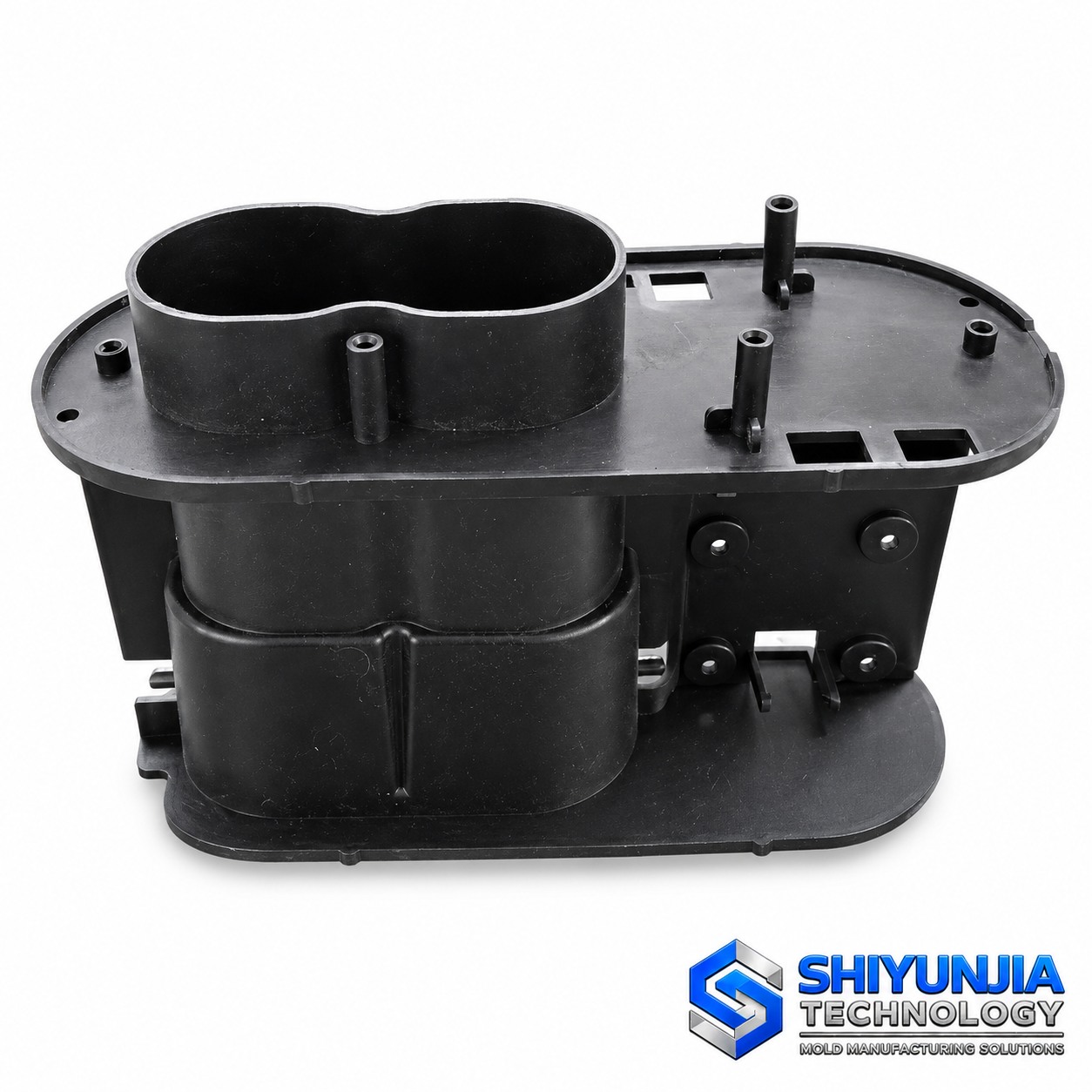
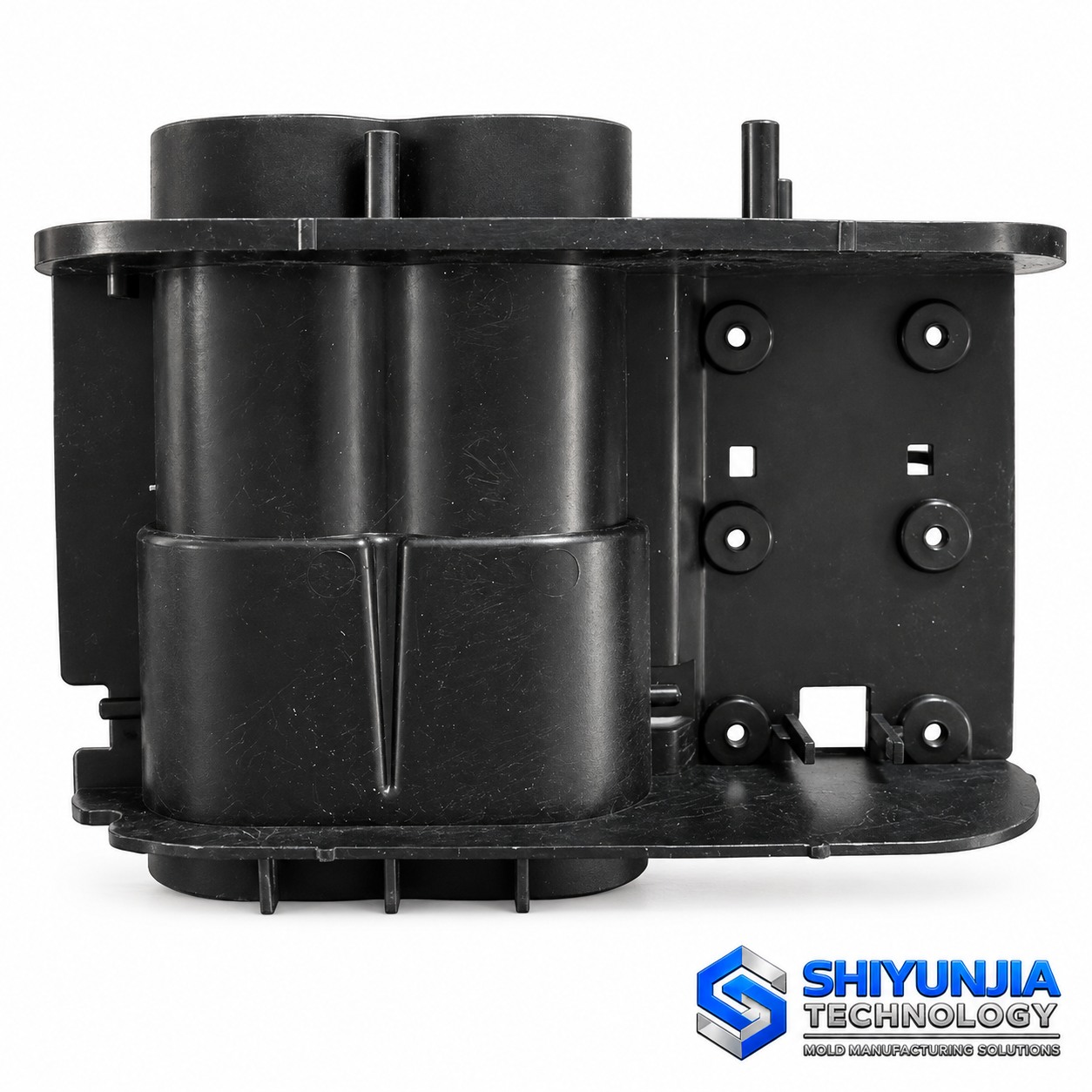
The component shown here combines a two-lobed opening profile, raised cylindrical posts, side-wall supports and rectangular openings. These three views provide a starting point for organizing a drawing-based review of an aroma diffuser component.
Discuss a Component Project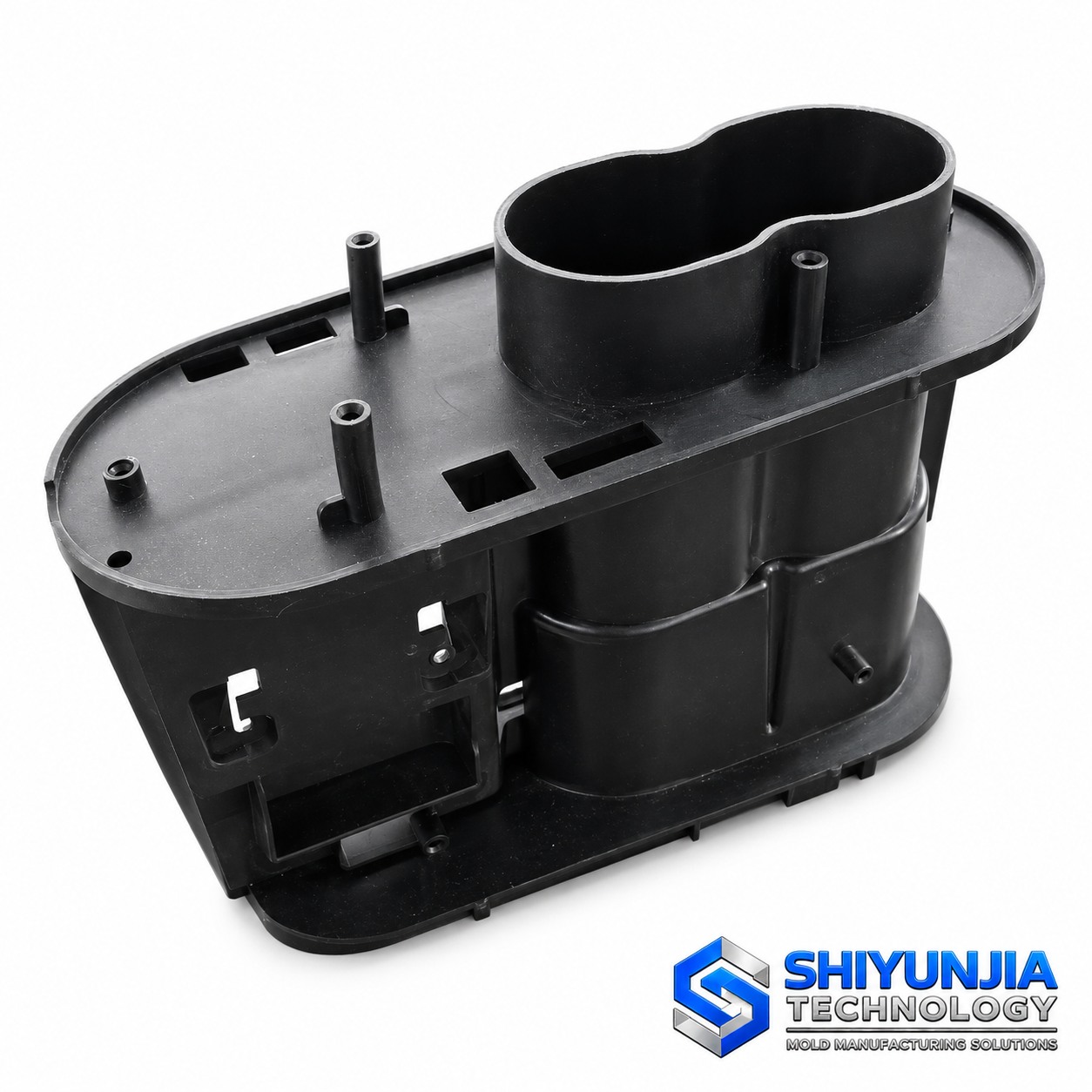
What the Component Views Show
The top view shows the opening outline and posts rising from the flange. The side and angled views reveal additional wall supports, round features and lower-edge geometry. These features should be reviewed together with the components they locate, support or connect.
For project-specific recommendations, use the latest 3D data, controlled 2D drawings and mating parts to establish dimensions, tolerances and the intended assembly.
Four Questions for the Assembly Review
1. What Must the Posts Locate or Fasten?
Confirm the mating components, post positions, seating heights and fastening method. Where screws or inserts are used, include their specifications and the assembly procedure. Define the functional interfaces before assigning tolerances.
2. How Do Ribs Meet the Main Wall?
Review the wall and rib sections in CAD, including their junctions and release direction. For an injection-molded version, the selected resin, local thickness and tooling layout should be assessed together. Appearance requirements should identify any visible surfaces opposite these features.
3. Which Edges and Openings Control Fit?
Identify the flange surfaces, locating edges and openings that interact with the rest of the assembly. Agree on the required clearances and measurement datums. Check the component with the intended mating parts when reviewing samples.
4. What Are the Material and Use Requirements?
Confirm the specified polymer and exact grade from approved drawings or material records. Record any material marks visible on the part. Describe any actual contact with fragrance, water or cleaning agents, and any heat or electrical requirements. Material selection and validation should follow the specified service conditions.
Prepare the Information That Makes DFM Useful
For a similar component, send the latest part data and explain how it fits into the complete product. Our injection molding DFM and product design review can be scoped around the decisions that remain open.
- 3D part data, controlled 2D drawings and revision numbers
- Mating components, assembly sequence and relevant fastener details
- Specified resin grade, color, appearance and operating conditions
- Critical dimensions, inspection datums and functional acceptance criteria
- Expected quantity, production location and target schedule
Define Sample Acceptance Before Tooling
Agree how the post positions, mating edges, openings and assembly behavior will be checked. Record the drawing revision and material used for the samples. After an agreed design or tooling change, verify the affected features again against the same requirements.
See our mold trial and sample approval process for the review and approval workflow. For the broader manufacturing scope, explore custom injection mold manufacturing and plastic injection molding services.
Discuss Your Project
Send the component and assembly information for project review. You can also explore our small appliance plastic parts application page or return to project examples.
Send Your Project Details